
90 Starwood Drive Unit 3 Guelph, ON N1E 0T6
If you are in your 60s, 70s, or even 80s and have been living with missing teeth or uncomfortable dentures, you may have wondered: “Am I simply too old for dental implants?”
It is an understandable concern. Dental implants involve a surgical procedure and a period of healing, so many older adults assume there must be an age when implants are no longer an option.
The reality is more reassuring. There is no universal upper age limit for dental implants. Your overall health, oral health, jawbone, healing capacity, medications, and ability to maintain the implant generally matter more than the number of candles on your birthday cake.
At Alora Dental Guelph, Dr. Julia Chrapka and the dental team believe that implant candidacy should be assessed individually. For patients in Guelph and nearby communities such as Rockwood, Puslinch, Fergus, Elora, and Cambridge, the first step is understanding what actually determines whether dental implants are appropriate for you.
Can You Be Too Old for Dental Implants?
Age alone does not automatically disqualify an adult from receiving dental implants.
A healthy person in their 70s may be a more suitable candidate than someone decades younger who has uncontrolled gum disease, smokes heavily, or has a health condition that interferes with healing.
This is why a dental implant consultation involves much more than asking your age.
Your dentist needs to understand your medical history, examine your mouth, evaluate the condition of your gums and remaining teeth, and determine whether there is enough healthy bone to support an implant.
The goal is not simply to determine whether an implant can be placed. It is to determine whether implant treatment is likely to provide a stable, maintainable tooth replacement for your individual circumstances.
What Matters More Than Your Age?
Several factors play a much larger role in dental implant candidacy than age itself.
1. Your Overall Health
Dental implant placement is a surgical procedure, which means your body’s ability to heal is important.
During your consultation, your dentist will want to know about your current and previous health conditions, medications, previous surgeries, and other relevant medical information.
Having a medical condition does not necessarily mean you cannot receive an implant. However, certain conditions or medications may influence healing or require additional planning.
Never leave something out because it seems unrelated to your teeth. Your complete medical history helps your dental team assess treatment more safely.
2. The Health of Your Gums
Healthy gums help create a stable environment around dental implants.
If active gum disease is present, it may need to be addressed before implant treatment begins. Gum disease involves inflammation and infection of the tissues supporting the teeth, and advanced disease can also affect the underlying bone.
Your dentist will therefore assess your gums rather than focusing only on the space where a tooth is missing.
This is particularly important for people who lost teeth because of periodontal disease. The reason a tooth was lost can provide useful information when planning its replacement.
3. How Much Jawbone Do You Have?
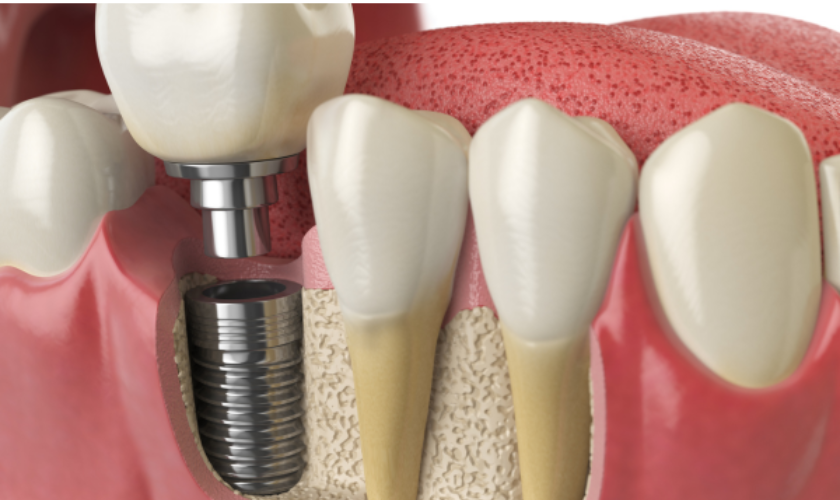
A dental implant is placed into the jawbone, where it functions as an artificial tooth root. For the implant to remain stable, it needs adequate supporting bone.
After a natural tooth is lost, the bone in that area can gradually change because it no longer receives stimulation from the tooth root.
This means someone who has been missing a tooth for many years may have less bone in that area than someone whose tooth was recently lost.
However, reduced bone does not automatically mean implants are impossible.
Depending on the location and extent of bone loss, additional procedures may sometimes be considered to improve the foundation for implant placement. The appropriate approach can only be determined after clinical examination and diagnostic imaging.
4. Your Ability to Heal
One of the most important stages of implant treatment happens after the implant has been placed.
During healing, the implant needs to establish a stable connection with the surrounding bone, a biological process known as osseointegration.
Healing is influenced by many factors beyond age. Smoking, certain health conditions, medications, nutrition, oral hygiene, and individual biology may all affect recovery.
This is another reason chronological age tells only part of the story.
Rather than assuming an older patient will automatically heal poorly, your dentist considers the patient’s actual health and risk profile.
5. Smoking and Tobacco Use
Smoking deserves particular attention when discussing dental implants.
Tobacco use can interfere with normal healing and is associated with an increased risk of complications around dental implants. It can also contribute to gum problems that affect the tissues supporting an implant.
Being a smoker does not mean you should make assumptions about your candidacy on your own. Instead, tell your dentist honestly about tobacco or nicotine use.
That information helps your dental team have a realistic discussion about risks and the steps that may improve your treatment outlook.
6. Your Oral Hygiene Habits
A dental implant cannot develop a traditional cavity, but that does not mean it is maintenance-free.
Plaque can still accumulate around an implant and affect the surrounding gum and bone. Long-term implant care therefore requires consistent brushing, cleaning around the implant, and professional dental maintenance.
Before recommending implant treatment, your dentist may consider whether you can comfortably maintain the area.
For some older adults, arthritis, reduced hand dexterity, or other mobility concerns can make oral hygiene more difficult. If that applies to you, tell your dental team. They can discuss practical approaches and cleaning aids that may make daily care easier.
Why Do Older Adults Consider Dental Implants?
Tooth loss can affect much more than the appearance of your smile.
Missing teeth may change how comfortably you chew certain foods. Depending on the location and number of missing teeth, they may also influence speech, bite function, and confidence.
Some older adults have worn removable dentures for years but become frustrated with movement, pressure spots, or difficulty chewing.
Dental implants can be used in different ways depending on how many teeth are missing. An implant may support a single replacement tooth, while multiple implants can sometimes be incorporated into treatment for several missing teeth or to provide additional support for a prosthesis.
For people exploring dental implants in Guelph, the important question is therefore not simply, “How old am I?” It is, “Which tooth replacement option makes the most sense for my health, mouth, lifestyle, and long-term needs?”
What If You Have Been Missing Teeth for Years?
Do not assume you waited too long.
Many patients considering implants have lived with missing teeth or dentures for years. What matters now is the current condition of your jaw, gums, remaining teeth, and overall health.
Because bone can change following tooth loss, someone who has been missing teeth for a long time may require a more detailed assessment.
Diagnostic imaging helps your dentist evaluate the available bone and important surrounding structures before deciding what options are appropriate.
In some cases, additional treatment may be necessary before an implant can be considered. In others, an alternative tooth replacement may ultimately be more appropriate.
A consultation gives you an answer based on your mouth rather than your age or assumptions.
Are Dental Implants Worth Considering Later in Life?
This is a personal decision.
Instead of looking only at how many years you expect a restoration to last, consider what you want from your teeth during those years.
Do you want to chew more comfortably? Are you tired of dealing with a missing tooth? Does your removable denture make eating difficult? Would a more stable tooth replacement improve your daily routine?
For many adults, quality of life is an important part of the decision.
At the same time, dental implants are not automatically the right treatment for every patient. Bridges, partial dentures, complete dentures, and other restorative options may also deserve consideration.
A useful consultation should explain your choices clearly, including the benefits, limitations, treatment process, maintenance requirements, and factors specific to your health.
What Happens During a Dental Implant Assessment?
Your implant assessment begins with a conversation.
Your dentist will want to understand what is bothering you, how long your tooth or teeth have been missing, and what you hope to achieve.
The evaluation may include:
- Reviewing your medical and dental history
- Discussing medications and relevant health conditions
- Examining your gums and remaining teeth
- Assessing your bite
- Evaluating the missing-tooth area
- Reviewing appropriate dental imaging
- Assessing available jawbone
- Discussing your oral hygiene and lifestyle factors
Once this information is gathered, your dentist can explain whether implants appear suitable and what treatment may involve.
For patients travelling from Rockwood, Puslinch, Fergus, Elora, Cambridge, and other communities surrounding Guelph, having this assessment can replace uncertainty with a clearer understanding of the available options.
Your Age Does Not Tell the Whole Story
If you have avoided asking about dental implants because you thought you were “too old,” it may be time to replace that assumption with an individual assessment.
Your birthday is only one small piece of the picture.
Your general health, gum health, available jawbone, medications, healing ability, oral hygiene, lifestyle, and personal goals provide far more useful information when determining whether dental implants may be right for you.
At Alora Dental Guelph, Dr. Julia Chrapka and the dental team can assess your oral health and discuss appropriate options for replacing missing teeth. The practice is located at 90 Starwood Drive, Unit 3, Guelph, ON, and welcomes patients from Guelph and surrounding communities.
If missing teeth or uncomfortable dentures are affecting your daily life, schedule a consultation with Alora Dental Guelph to learn which tooth replacement options may be appropriate for you.
FAQs
Can a 70-year-old get dental implants in Guelph?
Potentially, yes. Being 70 does not automatically prevent someone from receiving dental implants. Your dentist will consider your oral health, jawbone, general health, medications, healing capacity, and other individual factors before recommending treatment.
I live in Fergus. Do I need a separate dentist for an implant consultation?
Patients from Fergus and communities surrounding Guelph can arrange an assessment with a dental practice that provides implant evaluations. The dentist can examine your individual situation and explain whether treatment can be provided there or whether referral to another dental professional is appropriate.
Does osteoporosis automatically prevent me from getting implants?
Not necessarily. Bone health and relevant medications need to be evaluated individually. If you have osteoporosis or take medication for bone-related conditions, make sure your dentist has a complete and accurate medical and medication history before implant treatment is considered.
What if I have worn dentures for many years?
Long-term denture wear does not automatically rule out implants. However, the jawbone can change after teeth are lost, so your dentist will need to assess your available bone and oral health before discussing appropriate options.
Are dental implants difficult to maintain as you get older?
Implants require consistent daily cleaning and regular professional care. If arthritis, dexterity limitations, or another issue makes cleaning difficult, discuss this during your appointment. Our dental team may recommend techniques or oral hygiene aids that make maintenance more manageable.